
The new clothes I brought over from India last week, like many of the other times I travelled, are sitting on a shelf, carefully folded. So did my embroidered sandals sit in their boxes for the entire previous year from when I brought them over from a Kolhapuri emporium. I basked in the knowledge that they were there, a piece of home tucked away in the closet.
When clothes travel over vast distances, they give rise to many phenomena, including fusion in the fashion of the times. But sometimes they also do strange things to people.
A professor in college I suddenly remember, for example.
Even in the Calcutta summers, when the concrete outside our college building grew so hot that even a drop of water disappeared immediately as it fell on the ground and the street dogs curled up in shady corners of the canteen to rest and no one shooed them away, our professor was always dressed impeccably. Dark trousers, full sleeved shirt, tie tightly in place and big black boots.
The staff room for the professors was relatively cool, shielded from the heat by thick walls of the famous building built in the British era. Everything else was engulfed by the sweltering heat in the afternoons. Even the railings of the verandah (that you had to walk across to reach the English Honours classrooms where we students waited) were like superheated rakes in the scorching sun.
No matter what the weather, which was mostly very hot and humid, our “Sir” was always dressed the same even as we sat in out thinnest cotton salwar kameezes under the noisy fan listening to his exposition of the wild storms in Riders to the Sea. I half expected him to vaporize inside the contraption of boots and shirt and trousers one day but he never did.
Sometimes he would tell us stories about his time in England at Oxford or Cambridge, about how he rode a horse in Hyde Park in the early mornings while people watched him admiringly. There were other younger “England-returned” professors in the department, but they had dropped the tie and embraced the open shoes and sometimes appeared in cotton Punjabis on hot days, but our professor never did.
Many years later I was reminded of “Sir” when I had a similar (but reverse) experience in the New Jersey cold. It was at a gathering on the occasion of Saraswati Puja, the annual festival in honour of the Goddess of Learning all Bengalis take very seriously.
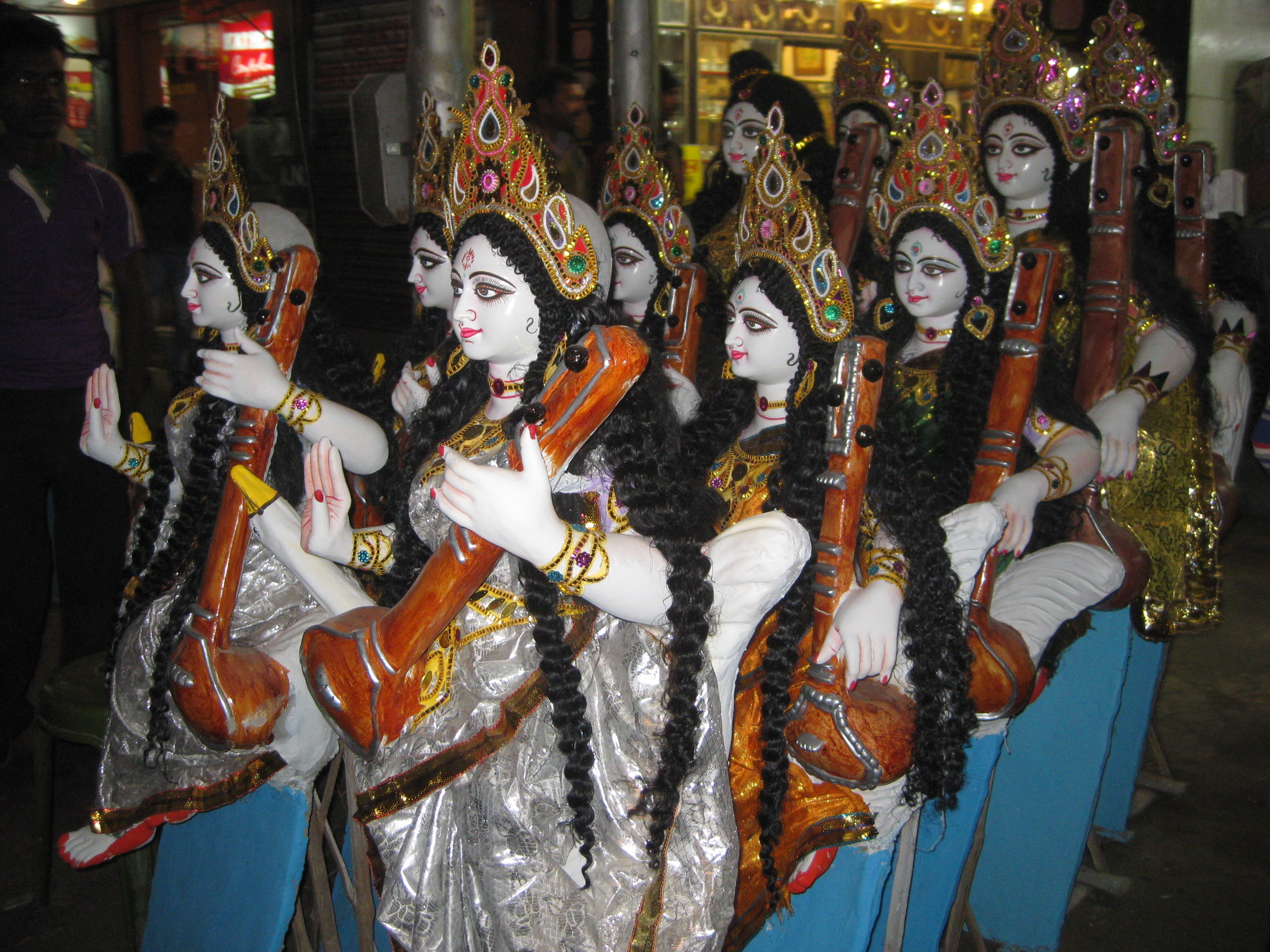
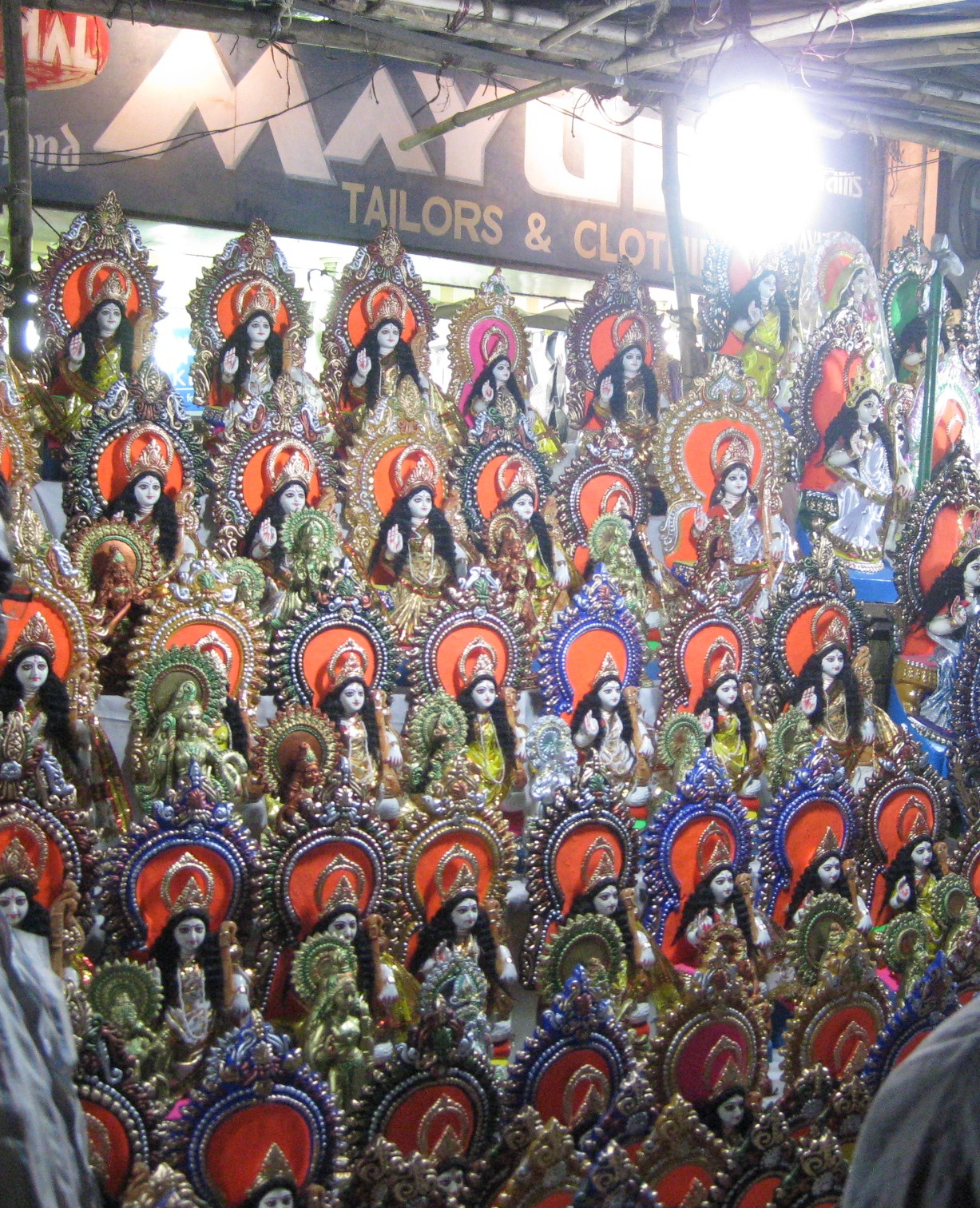
Traditionally, in Calcutta, many wear a basanti (yellow-saffron) coloured simple cotton sari for Saraswati Puja, very different from the gorgeous clothes worn during other festivals such as Durga Puja or Diwali. The festival is held in late January or sometime in February, just before Spring, with offerings for the Goddess from nature inkeeping with the season. The air is light, Spring is about to come but not here yet, but the heaviness of winter is certainly gone. At least in Calcutta.
Not so in New Jersey.
That February we decided to attend Saraswati Puja in New Jersey, it was very cold. The gathering was being held on a Saturday in a school precinct. So there was some appropriateness to the venue that the Goddess was being worshipped in and children were being initiated into the process of writing.
But as women after women emerged from family-sized cars in the large parking lot in long black coats under a grey winter sky rushing to get indoors, it seemed more like Christmas in foggy England. True, the ends of gorgeous saris peeped under the edges of the coats and sometimes a white patterned chaadmala with its glittery ends shone clutched in a hand here and there. Boxes of sweets to be offered to the Goddess were quickly carried out from the back seats as women hopped up the stairs or rushed to get something from the trunk adding a bit to the festive spirit. But the cold and the coats made me wonder whether the Goddess too would change her attire someday in the distant future to cater to a new population in a new climate.
Going back to my folded clothes on the shelf, when you are in Calcutta for a while you forget how cold the New York area can be even in March and you forget how hot Calcutta can get even in Spring. Hence suitcases full of clothes travel up and down the airplanes during my travels only to sit on shelves in both places while I stand out as somewhat odd in the clothes I repeatedly wear all the time in Calcutta. Apart from some clothes feeling like they’re too short or to tight or too small many also seem too warm to wear.
On the other hand, so many lovingly packed delicate clothes and shoes brought over from Calcutta never stand a chance against the cold and the wind of New York for most of the year.
Still, I think that we women have been luckier on the whole in our choice of clothes in two different climates, being able to choose between our western winter wear and our light, airy, cotton saris and salwar kameezes on very hot days in Calcutta.
But the men have had to bid adieu to the airy, cotton Bengali dhoti two generations ago (at least as everyday wear) and are in the odd place where they have to wear jeans or trousers all the time no matter what the weather. Going out in shorts in public is still not as common in Calcutta as it could have been and so the men are probably in the grip of the tyranny of their clothes to a greater extent in the heat than we women are!










 bottledworder
Leave a reply to josna Cancel reply