
There’s a lot of advice out there on how digital writing differs from traditional writing. Whenever a new way of expression is discovered, our response is exuberance and wonder at what current technology can do. Often, that kind of discussion spawns a myriad other discussions and rightly so.
Sometimes, while we build on the old, we only focus on the new as though the old is not relevant anymore.
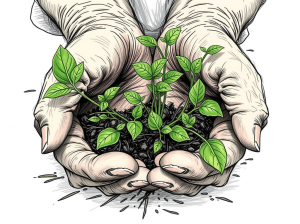
Imagine your garden. If we were gardening, we would be focusing on our top soil which now seems successful at nurturing a new kind of plant life. We think it came to exist all on its own.
Some of us attempt to become experts at that top soil culture and start thinking that the new way is way more advanced than the old. We become fascinated by our own tricks and the novelty of dazzling displays that anything fresh will inevitably provide. We think that it will magically transform our ways of expression.
Imagine another scenario. When new parents discover that a young child can imitate the idioms used by adults in a precociously innocent but very different way in a new context, they think it’s wonderful. Parents, uncles, aunts and grandparents make the child repeat the expression a myriad times just because it’s cute. Some also secretly hope that here’s a prodigy in the making.
So with our newly discovered ability to blend pictures digitally, edit videos, create storyboards and discover so many other new tools. These are great tools that certainly influence our form of communication. And yet, human communication remains similar in many fundamental ways. That’s the part we often ignore.
Our tools can create magic. Yet, from the artist or writer’s perspective, the magic is not in the tools. They help us perform some tricks but the tricks have to be performed in the service of something bigger. That something bigger is often something larger, something older, with deep connections to the bedrock below that top soil that holds up the new life that we’ve discovered.
Like everyone else, I’m often fascinated by the tools at my disposal in the digital age. I’m often so dazzled by them that it’s been difficult to remember their purpose — expression, communication and comprehension.
One way I’ve discovered through which I manage to escape the illusion of grandeur and keep myself grounded has been to imagine some great stalwarts of expression and communication from the past with the tools that I have available to me today.
What would, say, Homer do if he had access to digital publishing? Would he still have as many long speeches and such long stories? What would Milton do if he had access to the art of photography? Would there be as many descriptions? What would Oscar Wilde do if he had Twitter? Would his quips change form?
Sure they would.
But what about the things they had to say?
Then I ask myself a question. I have access to all these new ways of expression but do I have something worth expressing as they did?
Only then am I able to make a realistic assessment of my work.











 bottledworder
Leave a reply to sarahremy Cancel reply